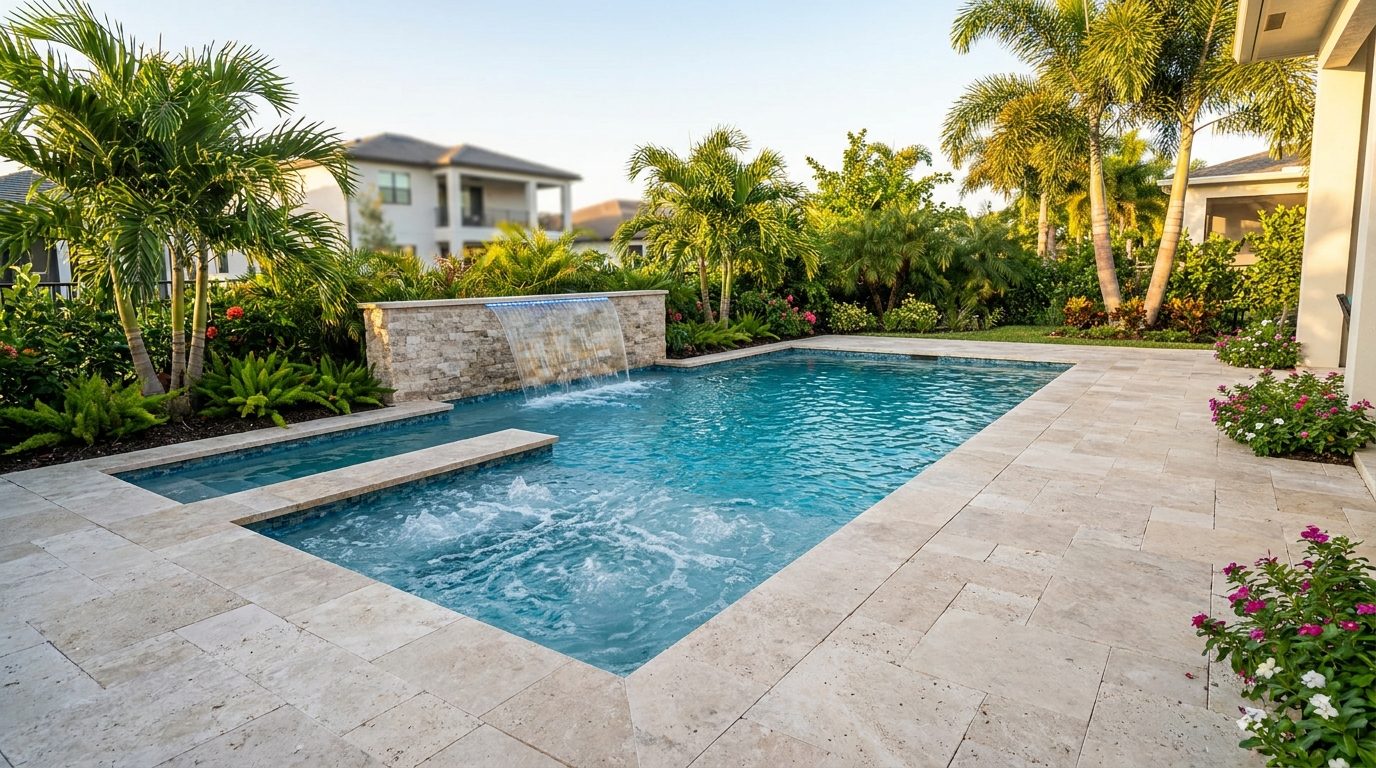
Small Pools, and All the Names They Go By
What Is a Plunge Pool?
So What Makes a Spool Different?
Start With How You'll Use It
A Spool Should Be Designed as a Complete System
Small Doesn't Necessarily Mean Cheap
Smaller Pools Can Actually Give You More Backyard
You Still Have All the Same Design Choices
Heating a Spool or Plunge Pool
Is a Spool or Plunge Pool Right for You?
Frequently Asked Questions About Spools and Plunge Pools
Design a Compact Pool Around How You'll Use It
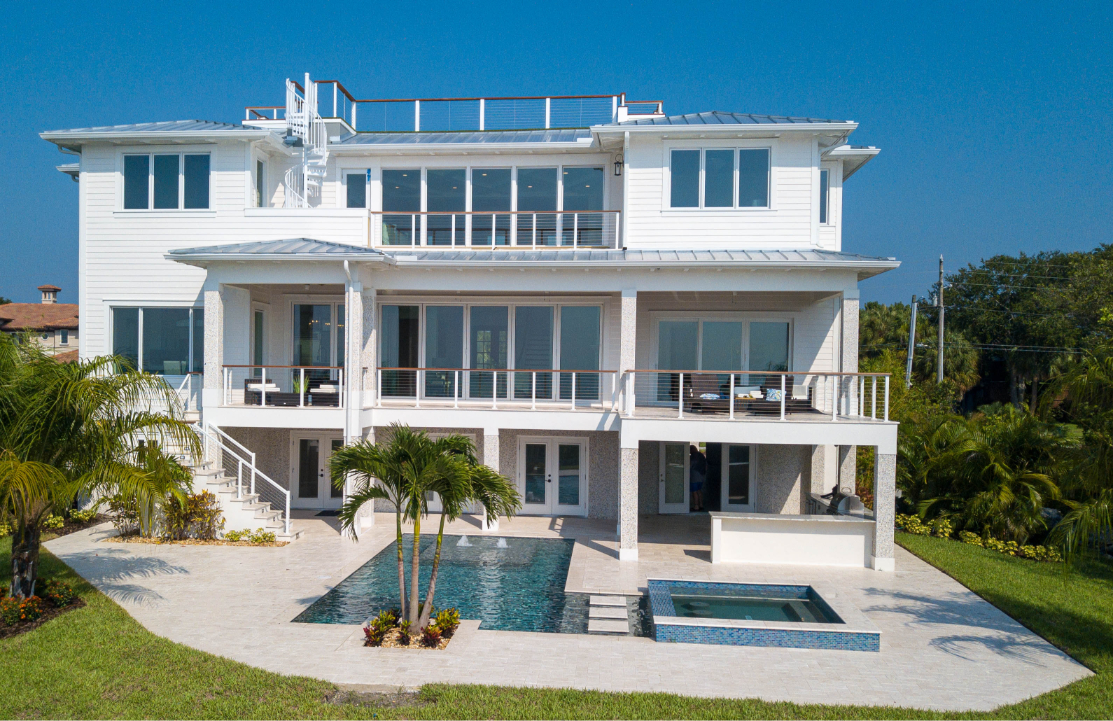
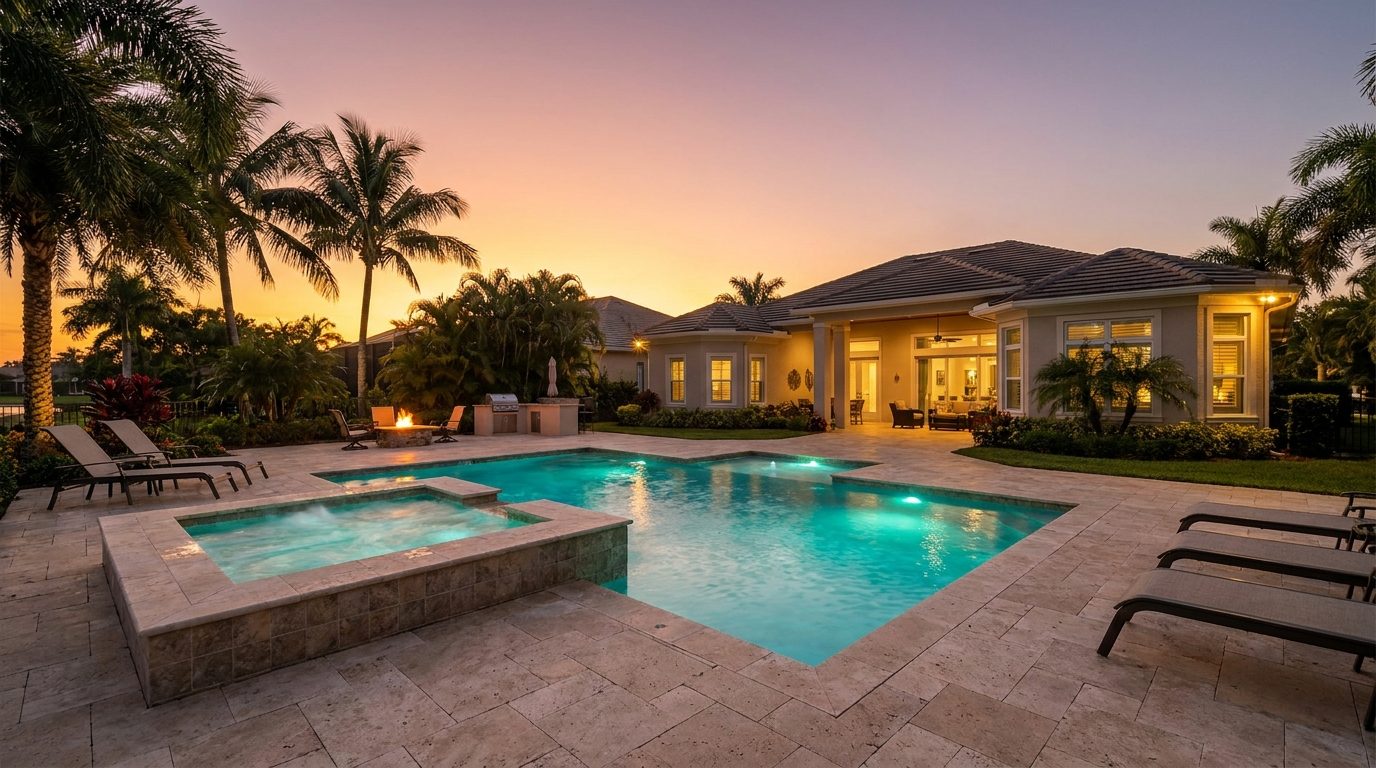
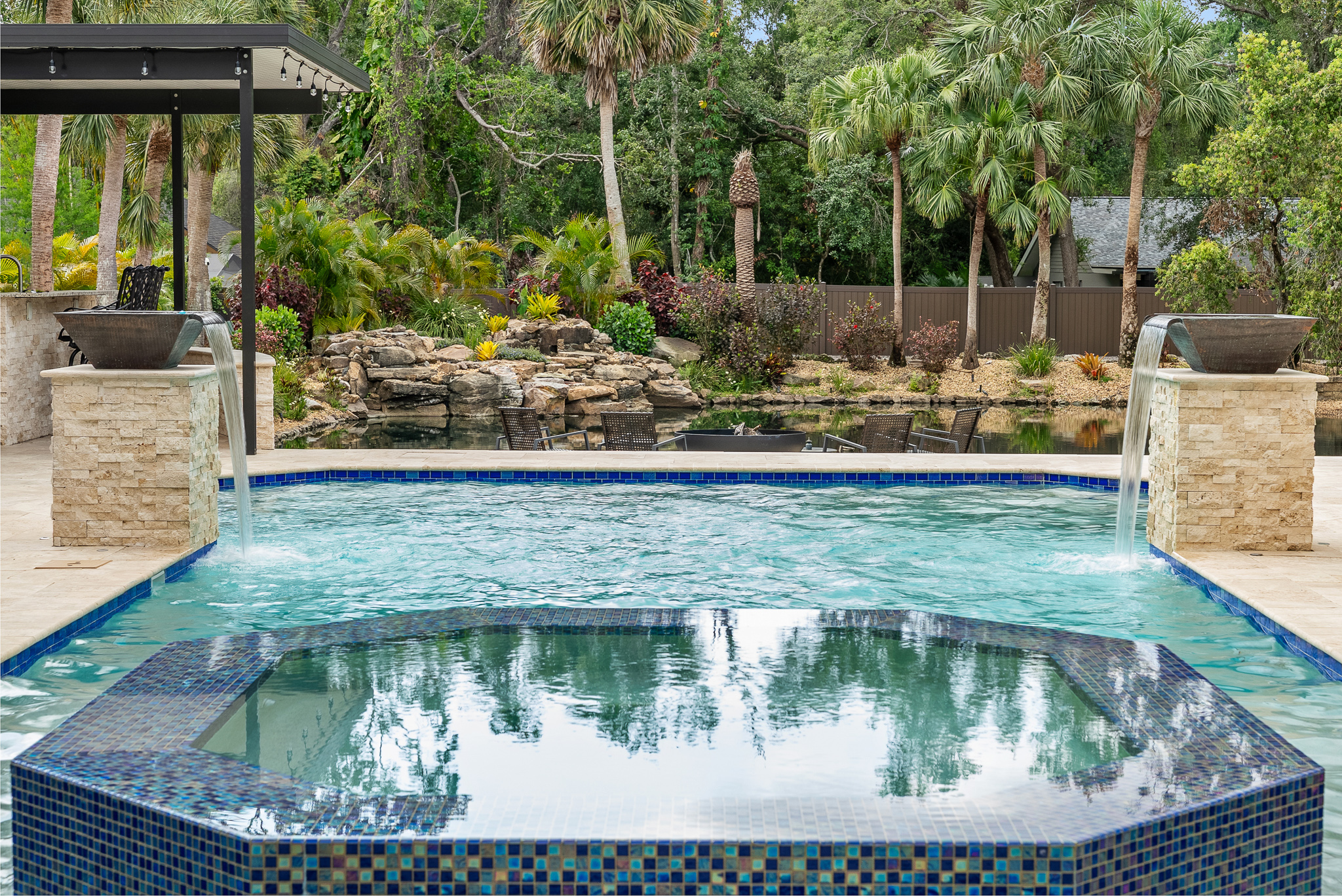
Small Pools, and All the Names They Go By
Small pools have become increasingly popular in Florida, particularly as lots get smaller and homeowners put more emphasis on the entire outdoor living space rather than using the entire backyard for a swimming pool.
That has also created a lot of terminology.
Plunge pool. Spool. Cocktail pool. Swim spa. Small pool.
You'll see some of these terms used interchangeably, but when I'm designing one, I'm much less interested in what we call it than I am in what you expect it to do.
That's especially important when comparing a plunge pool and a spool.
They're both compact bodies of water, but I don't think they're necessarily the same product. You can see the range of compact designs we build on our small pools page.
What Is a Plunge Pool?
I think of a plunge pool as exactly what the name suggests:
A swimming pool intentionally designed around a smaller footprint.
You may not be swimming laps in it, but you're still primarily designing a pool.
It can have steps, benches, sun shelves, bubblers, water features, lighting and many of the same features we'd put into a larger custom pool.
It can also be heated.
What makes it a plunge pool isn't a specific length, width or depth. It's the fact that we're taking the pool experience and fitting it into a smaller space.
For some homeowners, that's exactly what they need.
Maybe the backyard is small. Maybe they want to preserve more room for an outdoor kitchen, covered living area or landscaping. Or maybe they simply don't need a 30 or 35 foot swimming pool.
Bigger isn't automatically better if you aren't going to use the extra space.
So What Makes a Spool Different?
A spool combines elements of a spa and a pool into one body of water.
That's where the name comes from: spa plus pool.
But I wouldn't define a spool simply as a plunge pool with jets.
If we're designing something to function as a spool, I want to think about the entire experience differently.
Where are people going to sit? How many people should be able to use it comfortably? Do we want spa style jets? Where should those jets be located? Do we want foot jets? How quickly does the homeowner expect the water to be heated? Are they primarily going to use it hot, primarily use it as a pool, or regularly switch between the two?
Those decisions can affect the seating, plumbing, pumps, heating system, automation and overall layout.
A few jets installed in the wall of a small pool don't automatically make it a well designed spa.
If you want it to function like both a pool and a spa, it should be designed that way from the beginning.
Start With How You'll Use It
This is the easiest way I know to explain the difference.
If you tell me: "I want somewhere to get in the water, cool off, float around and enjoy the backyard, but I don't need a large pool," I'm probably thinking plunge pool.
If you tell me: "I want to cool off during the summer, but I also want to turn the heat up, sit on a bench with friends and use spa jets when the weather gets cooler," now I'm thinking spool.
Neither one is better.
They're designed around different expectations.
And just like choosing between a gas heater and a heat pump, the right answer starts with understanding how you're actually going to use it.
A Spool Should Be Designed as a Complete System
One reason I make the distinction between a spool and a small pool with a couple of jets is equipment design.
Spa jets require water flow.
The number of jets and the experience you're trying to create all affect how the hydraulic system should be designed.
Heating matters too.
If you expect to use the spool at spa temperatures, that's different from occasionally taking the chill off a swimming pool. Your heating expectations should be part of the equipment conversation from the beginning.
The same applies to automation. If you're regularly changing between pool and spa mode, the controls should make that easy for the homeowner.
This is why I wouldn't start designing a spool by choosing a small pool shape and adding spa features afterward.
Start with how you want it to function, then design the structure and equipment around that.
Small Doesn't Necessarily Mean Cheap
This is probably one of the biggest misconceptions about spools and plunge pools.
Homeowners sometimes assume that a pool half the size should cost half as much.
Pool construction doesn't really work that way.
A smaller pool may require less excavation, concrete, steel, interior finish and decking.
But many of the major components of the project don't disappear.
You still need pool equipment. You still need plumbing. You still need electrical work. You still need permits and engineering. You still have mobilization and construction costs.
And if you're building a spool, you may be adding equipment and plumbing for spa functionality that a basic swimming pool wouldn't require.
That's why I don't automatically recommend a spool or plunge pool to someone whose primary goal is simply to build the least expensive pool possible. Our breakdown of what actually drives pool cost explains why.
Sometimes the price difference between the compact design and giving the homeowner a little more swimming area is smaller than they expected.
If the smaller footprint is what you genuinely want, great.
But let's make that a design decision, not an assumption about price.
Smaller Pools Can Actually Give You More Backyard
This is where I think compact pools get really interesting from a design standpoint.
Not every backyard should be dominated by the swimming pool.
Sometimes reducing the pool footprint gives us room to create a much better overall outdoor space.
Maybe that extra area becomes an outdoor kitchen. Maybe it's a covered seating area with a fireplace. Maybe it's additional deck space where people can actually gather. Maybe it's landscaping that makes the pool feel integrated into the property instead of filling every available foot of it.
This is particularly valuable on smaller lots.
Instead of asking "What's the biggest pool I can fit?" I sometimes think the better question is "How much pool do I actually need?"
That's a very different design conversation.
You Still Have All the Same Design Choices
Choosing a smaller pool doesn't mean you're choosing a basic pool.
A custom concrete plunge pool or spool can still be designed around the architecture of the home and the style of the outdoor space.
It can be geometric and modern. It can have softer curves. It can incorporate benches, steps, water features, lighting, raised walls and other architectural elements.
Materials become especially important because the pool is often being designed as part of a larger outdoor living space.
The decking, coping, interior finish, tile and surrounding landscape should all work together.
A smaller body of water can actually become a very strong architectural feature when it's designed intentionally.
Heating a Spool or Plunge Pool
Both can be heated.
But once again, the correct equipment depends on what you expect it to do.
If you want to occasionally warm a plunge pool or maintain a comfortable swimming temperature, that's one set of expectations.
If you're building a spool specifically because you want the ability to bring the water to spa temperatures and use it on demand, that's another.
Gas heaters and heat pumps aren't inherently better than one another. They perform differently, and the right choice depends on the specific equipment, heating expectations, outdoor conditions, utilities and how you plan to operate the pool. If you do use a spool at spa temperature, the CPSC advises keeping spa water at or below 104 degrees Fahrenheit.
The fact that the body of water is smaller doesn't eliminate the need to have that conversation.
If anything, heating is one of the defining features of how many homeowners plan to use a spool.
Is a Spool or Plunge Pool Right for You?
I wouldn't choose either one because it's trending.
And I wouldn't choose one simply because you assume it's going to be dramatically less expensive than a larger pool.
I'd choose one because the footprint and functionality fit the way you want to use your backyard.
If you primarily want a compact place to swim, float and cool off, a plunge pool may be exactly what you're looking for.
If you want a compact pool that is intentionally designed to transition between swimming and spa style use, a spool may make more sense.
And if you have the space and your family genuinely wants a larger swimming area plus a separate spa addition, then neither may be the best answer.
That's what custom pool design is supposed to determine.
The conversation shouldn't start with "Do you want a spool or a plunge pool?" It should start with "What do you want to be able to do in your backyard?"
Once I understand that, deciding what to call the pool is the easy part.
Frequently Asked Questions About Spools and Plunge Pools
What is the difference between a spool and a plunge pool?
A plunge pool is a swimming pool designed around a smaller footprint, built for getting in, cooling off and floating. A spool is designed from the start to work as both a pool and a spa, with seating, spa style jets, heating and automation planned around that dual use. The difference is intent, not a fixed size.
Is a spool just a plunge pool with jets added?
Not if it is designed properly. Adding a few jets to the wall of a small pool does not make it a well designed spa. Seating position, jet placement, hydraulics, pump selection, heating capacity and automation all change when the pool is meant to be used at spa temperature.
Is a small pool cheaper to build?
It costs less than a large pool, but not proportionally. A smaller pool needs less excavation, concrete, steel, interior finish and decking, but equipment, plumbing, electrical, permitting, engineering and mobilization do not shrink with the footprint. A spool can also add spa plumbing and equipment a basic pool would not need.
Can a spool or plunge pool be heated?
Yes. Both can be heated, and most spool owners do heat theirs. The right equipment depends on whether you want to hold a comfortable swimming temperature or bring the water up to spa temperature on demand, which is a different job for the heating system.
How deep is a plunge pool compared with a spool?
Depth is customized rather than standardized. A plunge pool can run deeper because it is built for getting in and cooling off, while a spool is usually kept shallow enough to sit comfortably with the water at a relaxing level while using the jets.
Does a smaller pool leave more usable backyard?
Often, yes, and that is one of the strongest reasons to choose one. Reducing the pool footprint can free up room for an outdoor kitchen, a covered seating area, more deck space or landscaping, which frequently produces a better overall outdoor space than filling the yard with water.
Design a Compact Pool Around How You'll Use It
Whether it ends up being a spool, a plunge pool or something larger, the design should start with what you want to do in your backyard, not with a label.
Book a free design consultation with a Pool Perfection designer or call (727) 518-7665, and we'll work out which compact design actually fits your property and the way you plan to use it.