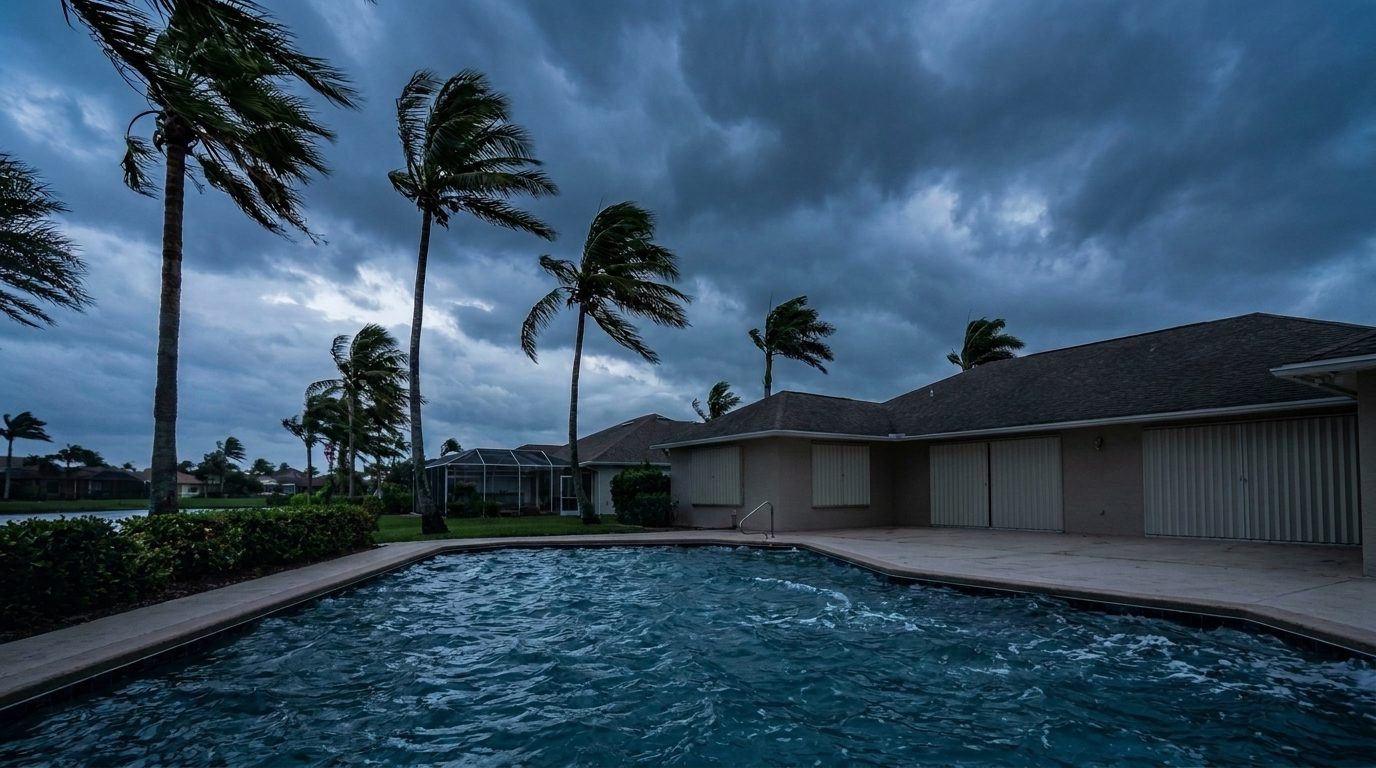
What Pool Owners Need to Know Before a Storm
Do Not Drain Your Pool Before a Hurricane
Don't Worry About Making Room for Rain
Secure Everything Around the Pool
Shut Down Your Pool Equipment
After the Storm: Start With What Actually Happened
Waterfront Pools Require a Different Post-Storm Inspection
A Dirty Pool Is Not Automatically a Damaged Pool
What About the Screen Enclosure?
The Most Important Advice Is Usually the Simplest
Frequently Asked Questions About Pools and Hurricanes
Storm Damage, or Just a Mess to Clean Up?
What Pool Owners Need to Know Before a Storm
Living in Florida means hurricane preparation eventually becomes part of owning a home, and if you own a pool, there are a few additional things you need to think about.
The good news is that preparing your pool doesn't need to be complicated.
Most of the important steps are about protecting the equipment, securing anything around the pool that can become airborne, and avoiding one potentially very expensive mistake: draining the pool before the storm.
After a hurricane, the approach is equally important. A pool filled with leaves and rainwater is very different from a pool that has been submerged by storm surge or affected by significant erosion.
Here's what I think Florida pool owners should understand before and after a major storm. For the storm itself, follow the guidance from the National Hurricane Center and your local emergency management office first. The pool comes second.
Do Not Drain Your Pool Before a Hurricane
This is the most important thing I can tell a pool owner before a hurricane:
Do not drain your pool in preparation for the storm.
It might seem logical to remove water so the pool has room for rainfall, but the bigger concern during a hurricane is what's happening in the ground surrounding the pool.
Heavy rainfall raises the groundwater table. That creates hydrostatic pressure underneath the pool shell.
The water inside your pool provides a tremendous amount of weight helping counteract that upward pressure. Remove that weight while groundwater levels are elevated and you increase the risk of the pool shell lifting or popping out of the ground.
A pool pop can cause catastrophic structural damage.
This risk doesn't disappear the moment the storm passes, either. Groundwater can remain elevated after prolonged or heavy rainfall.
If a pool needs to be significantly lowered or drained for repair or cleanup, particularly following flooding, that's a situation where I recommend contacting a licensed pool professional who can evaluate the conditions before proceeding.
Don't drain a pool because a hurricane is coming, and don't drain one immediately afterward because the water is dirty.
The water may look terrible. That's usually a much easier problem to fix than a pool shell that has moved.
Don't Worry About Making Room for Rain
Another question homeowners commonly have is whether they should lower their pool several inches before the storm to make room for rainfall.
For normal hurricane preparation, I wouldn't.
Some pools have overflow systems that allow excess rainwater to discharge once the water reaches a certain level. Others may require excess water to be addressed differently after the storm.
More importantly, storm surge and tidal flooding are completely different from rainfall.
If floodwater outside the pool rises above the pool elevation, an overflow line obviously isn't going to prevent that water from entering the pool.
At that point, you're dealing with a flood, not an overfilled swimming pool.
Protect the property and yourself first. The pool can be dealt with once conditions are safe.
Secure Everything Around the Pool
The biggest preparation homeowners can handle themselves is also one of the simplest:
Get loose objects out of the backyard.
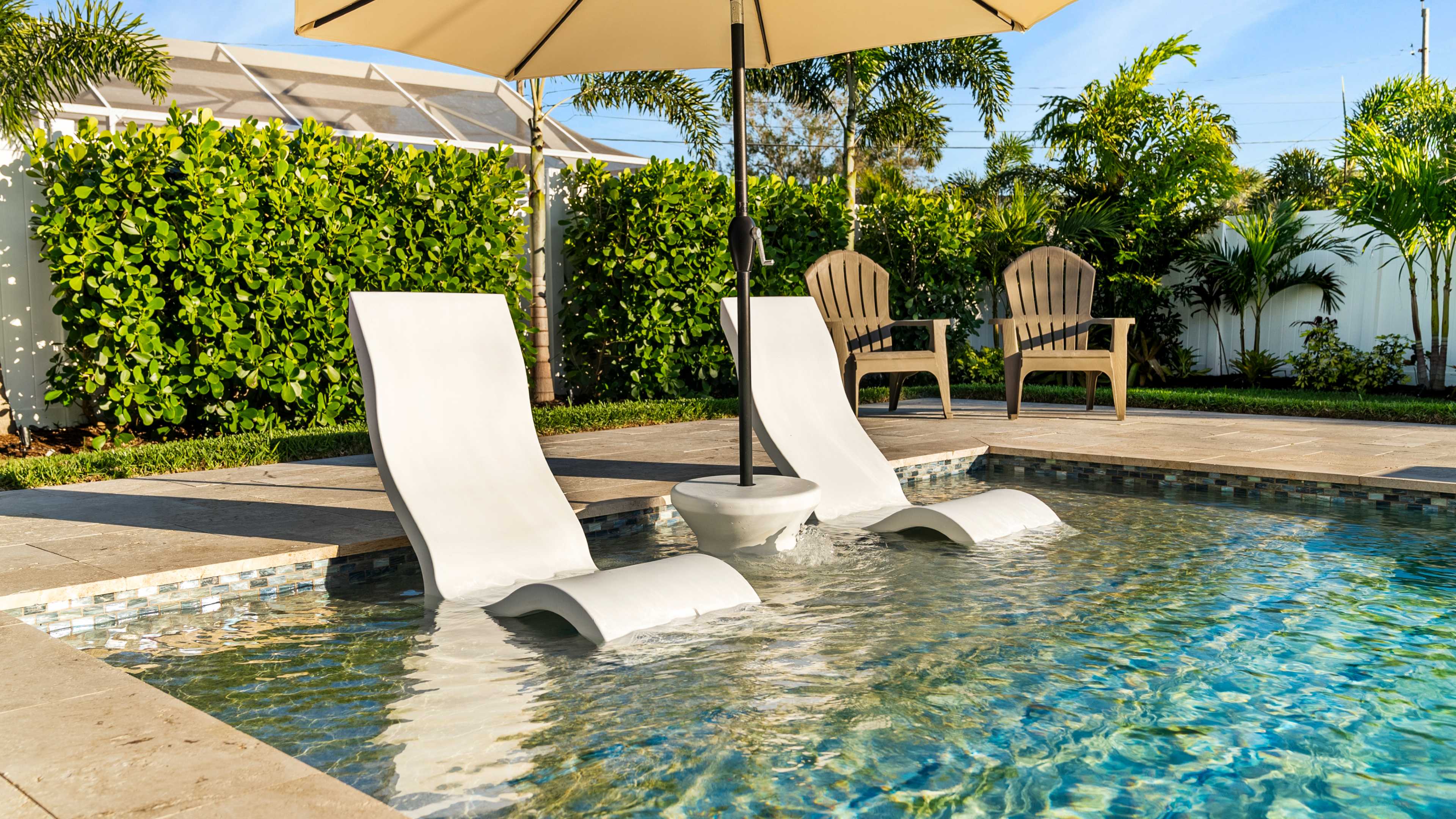
Umbrellas, chairs, tables, floats, toys and other loose objects can become projectiles in hurricane force winds.
Bring what you can into the house or garage and securely store the rest.
I would not recommend using your swimming pool as hurricane storage.
Putting furniture into the pool introduces unnecessary opportunities to scratch or damage the interior finish, and metal objects can potentially create staining.
The objective is simple: eliminate as many things as possible that the wind can pick up before the storm arrives.
If you have a screen enclosure, this is also the time to inspect it for obvious loose components or existing damage. Screen enclosures can take significant wind loads during hurricanes, particularly older structures or structures that already have compromised screens or connections.
Shut Down Your Pool Equipment
Before severe hurricane conditions arrive, turn off power to the pool equipment at the circuit breaker.
That includes the circulation pump, feature pumps, heater or heat pump, automation and other pool equipment.
The Florida Swimming Pool Association also recommends protecting exposed electrical equipment from wind driven rain and turning power off at the breakers before the storm.
If your property is at risk for flooding or storm surge, equipment becomes an even bigger concern.
Pool pumps, automation systems, heaters and other components aren't designed to operate underwater. Florida flood guidance specifically addresses protecting pool equipment in flood prone areas, including elevation where practical and anchoring equipment against flood forces.
If equipment becomes submerged during the storm, do not simply turn the breaker back on when the water recedes.
Flood exposed electrical equipment should be evaluated before being energized. FSPA specifically recommends professional evaluation of electric motors that have been exposed to water.
There's a difference between a pool getting six inches of rain and an equipment pad sitting under two feet of floodwater.
Treat them differently.
After the Storm: Start With What Actually Happened
Once the storm has passed and authorities say it's safe to go outside, assess the property before worrying about getting the pool perfectly clean.
A typical post storm pool may have leaves, branches, dirt and significant amounts of rainwater in it.
That's a cleanup problem.
A pool that experienced storm surge, tidal flooding, significant erosion or equipment submersion is a different situation.
That's when I want homeowners to slow down and determine what they're actually dealing with before turning equipment on or removing water.
For ordinary debris, start by removing larger material with a pool rake or net rather than trying to send everything through the pool's circulation system. FSPA similarly recommends manually removing debris and avoiding the regular vacuum or pump when heavy debris could clog the plumbing.
If the water is heavily contaminated, you can't see the bottom, or saltwater, sewage, mud or a substantial amount of sand entered the pool, contact a qualified pool service professional. For ordinary green or cloudy water, our guide to clearing cloudy pool water covers the normal recovery.
Don't assume ugly water means the pool needs to be drained.
Waterfront Pools Require a Different Post-Storm Inspection
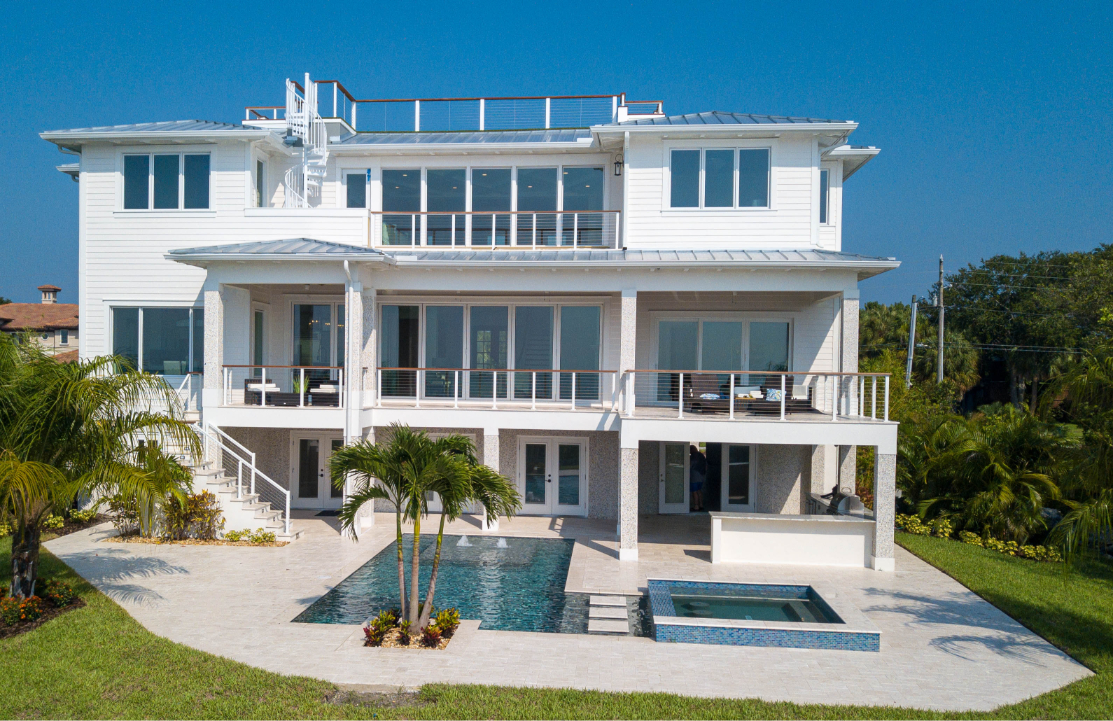
This is especially important around Tampa Bay.
A waterfront pool can survive a hurricane structurally while the property surrounding it experiences significant damage.
Storm surge and tidal flooding can move soil, wash out material beneath decking, lift or displace pavers and affect the ground surrounding the pool.
A seawall failure makes the situation considerably more serious.
If the ground supporting the pool or deck has moved, what you're evaluating is no longer simply hurricane cleanup.
Look for things that weren't there before the storm: new or significant cracking, areas of deck that have settled or lifted, pavers that have moved or washed away, voids or washout beneath the deck, visible erosion, movement or failure around a seawall, and pool equipment that was submerged or physically moved.
A few displaced pavers don't automatically mean the pool structure has a problem.
But significant soil movement, erosion or seawall damage deserves a professional evaluation before assuming everything underneath the surface is intact.
This is also one of the reasons site conditions matter so much when a pool is originally designed and built. Waterfront construction requires thinking about more than the pool itself. Elevation, drainage, soil retention, deck support and the conditions surrounding the structure all matter.
A Dirty Pool Is Not Automatically a Damaged Pool
After a major storm, pools can look terrible.
That doesn't necessarily mean they're structurally damaged.
Leaves, dirt, branches and rainwater can turn a clean pool into a mess overnight. Flooding can make it considerably worse.
The first question shouldn't be "How quickly can I get this water out?"
It should be "What happened to this property during the storm?"
If the answer is mostly wind, rain and debris, you're probably dealing with cleanup.
If the answer includes storm surge, equipment submersion, seawall failure, major erosion or ground movement, bring in the appropriate professionals before restarting equipment or making assumptions about the structure.
What About the Screen Enclosure?
Screen enclosures are particularly vulnerable to hurricane winds and flying debris.
After the storm, inspect the enclosure from a safe location for damaged panels, bent structural members, loose connections or sections that may be unstable.
For significant enclosure damage, contact a qualified screen enclosure contractor.
And if you plan to make an insurance claim, contact your insurance company to determine what your particular policy covers.
I would not make assumptions about insurance coverage based on what happened to a neighbor's home or what was covered after a previous storm. Policies and circumstances differ.
The Most Important Advice Is Usually the Simplest
When a hurricane is approaching, homeowners understandably want to do everything possible to protect their property.
With a swimming pool, doing more isn't always better.
Secure the backyard. Turn off the pool equipment at the breaker before severe conditions arrive. Don't drain the pool to make room for rain. And once the storm passes, determine whether you're dealing with ordinary cleanup or actual flood and structural damage before you start trying to fix things.
If your property experienced storm surge, significant erosion, a seawall failure or submerged pool equipment, that's the time to get professionals involved.
A swimming pool is designed to hold tens of thousands of pounds of water.
During a hurricane, in many cases, leaving that water exactly where it is is one of the most important things you can do.
Frequently Asked Questions About Pools and Hurricanes
Should I drain my pool before a hurricane?
No. Heavy rainfall raises the groundwater table and creates hydrostatic pressure under the pool shell. The water inside the pool is the weight counteracting that pressure. Draining it while groundwater is elevated increases the risk of the shell lifting or popping out of the ground, which is catastrophic structural damage.
Should I lower the water level to make room for rain?
For normal hurricane preparation, no. Some pools have overflow systems that discharge excess rainwater on their own. More importantly, storm surge and tidal flooding are not rainfall, and an overflow line will not stop floodwater that rises above the pool elevation.
Can I put patio furniture in the pool during a storm?
I would not recommend it. Furniture in the pool creates unnecessary opportunities to scratch or damage the interior finish, and metal objects can cause staining. Bring what you can inside and securely store the rest instead.
What should I do with my pool equipment before a hurricane?
Turn off power at the circuit breaker before severe conditions arrive, including the circulation pump, feature pumps, heater or heat pump and automation. The Florida Swimming Pool Association also recommends protecting exposed electrical equipment from wind driven rain.
My pool equipment was underwater. Can I turn it back on?
Do not simply switch the breaker back on once the water recedes. Flood exposed electrical equipment should be evaluated before being energized, and FSPA specifically recommends professional evaluation of electric motors that have been exposed to water.
How do I clean my pool after a hurricane?
Start by removing larger debris with a rake or net rather than running it through the circulation system, which heavy debris can clog. If the water is heavily contaminated, you cannot see the bottom, or saltwater, sewage, mud or significant sand entered the pool, call a qualified pool service professional rather than draining it.
Storm Damage, or Just a Mess to Clean Up?
If your property came through the storm with cracking, deck settlement, washout under the deck, visible erosion, seawall movement or submerged equipment, that deserves a professional look before anyone restarts equipment or removes water.
Pool Perfection has built and renovated pools across Tampa Bay's waterfront since 2004. Call (727) 518-7665, or read about our pool renovation work if the storm turned into a bigger project than you expected.